Cytotoxic Effects of Salvia officinalis Extraction MCF-7 Human Breast Cancer Cells
DOI:
https://doi.org/10.63912/kjaise.v1i0.0005Keywords:
MCF-7, Breast cancer, Salvia officinallis, CytotoxicityAbstract
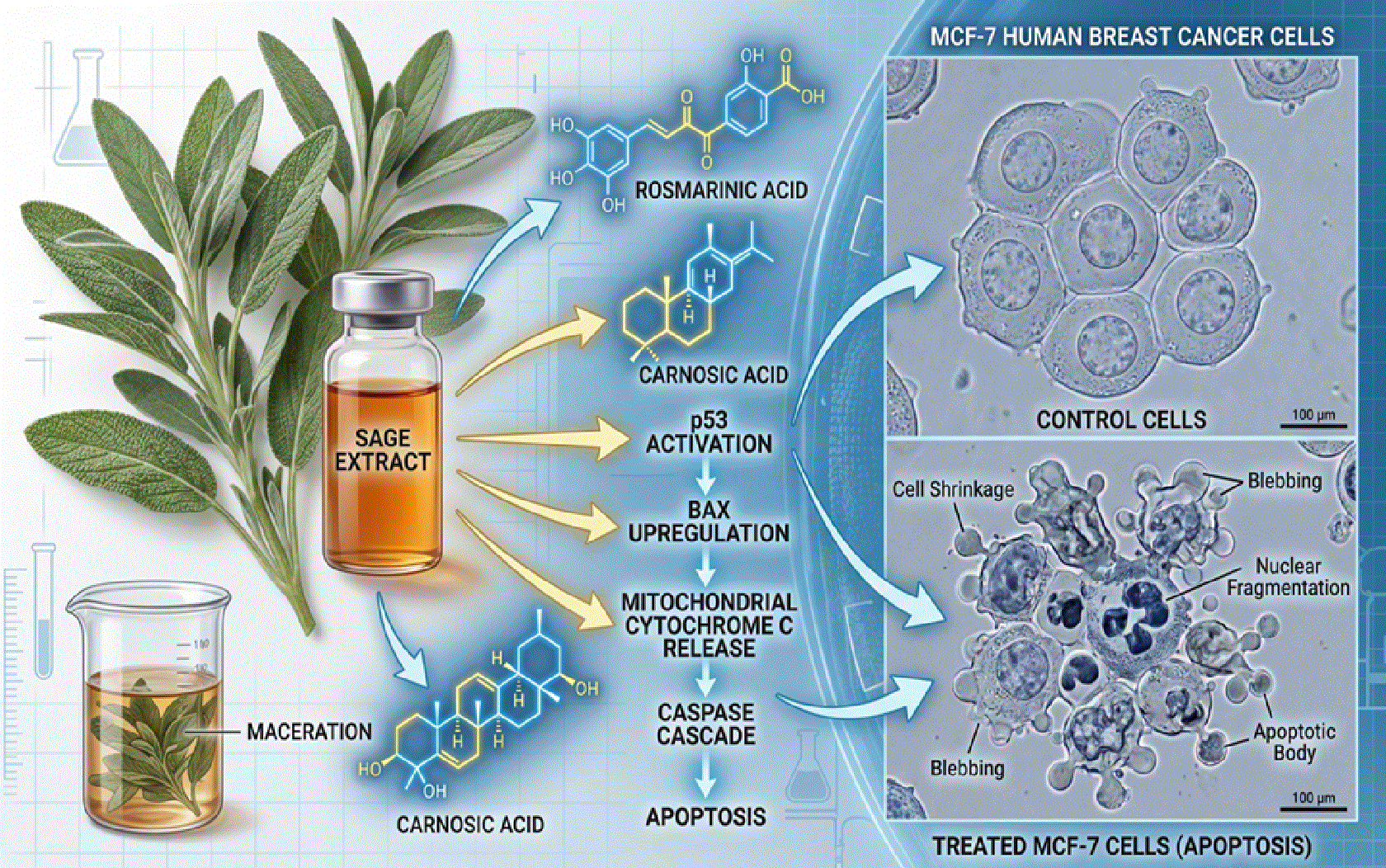
Salvia officinalis (sage) is a medicinal plant known for its antioxidant and potential anticancer properties. This study aimed to evaluate the cytotoxic effects of sage extract on human breast cancer cells (MCF-7). MCF-7cells were treated with varying concentrations of sage extract ,and cell viability was assessed using the MTT assay. Results demonstrated a dose-dependent reduction in cell viability, with the highest extract concentration reducing viability by approximately 60%. The estimated IC₅₀ value indicated moderate cytotoxic potency. These findings suggest that Salvia officinalis contains bioactive compounds capable of inhibiting breast cancer cell proliferation. Further studies are recommended to elucidate the underlying mechanisms and evaluate its therapeutic potential in-vivo.
References
1. G. P. P. Kamatou, N. P. Makunga, W. P. N. Ramogola, and A. M. Viljoen, "South African Salvia species: A review of biological activities and phytochemistry," J. Ethnopharmacol., vol. 119, no. 3, pp. 664–672, Oct. 2008, doi: 10.1016/j.jep.2008.06.030.
2. R. Tundis, M. Leporini, M. Bonesi, S. Rovito, and N. G. Passalacqua, "Salvia officinalis L. from Italy: A comparative chemical and biological study of its essential oil in the Mediterranean context," Molecules, vol. 25, no. 24, Art. no. 5826, 2020, doi: 10.3390/molecules25245826.
3. M. H. H. Roby, M. A. Sarhan, K. A. H. Selim, and K. I. Khalel, "Evaluation of antioxidant activity, total phenols and phenolic compounds in thyme (Thymus vulgaris L.), sage (Salvia officinalis L.), and marjoram (Origanum majorana L.) extracts," Ind. Crops Prod., vol. 43, pp. 827–831, Jan. 2013, doi: 10.1016/j.indcrop.2012.08.029.
4. V. G. Kontogianni et al., "Phytochemical profile of Rosmarinus officinalis and Salvia officinalis extracts and correlation to their antioxidant and anti-proliferative activity," Food Chem., vol. 136, no. 1, pp. 120–129, Jan. 2013, doi: 10.1016/j.foodchem.2012.07.091.
5. S. B. Moghadam, R. Masoudi, and M. Monsefi, "Salvia officinalis induces apoptosis in mammary carcinoma cells through alteration of Bax to Bcl-2 ratio," Iran. J. Sci. Technol. Trans. A Sci., vol. 42, no. 1, pp. 297–303, Mar. 2018, doi: 10.1007/s40995-018-0496-x.
6. M. U. Rashid and K. M. Coombs, "Serum-reduced media impacts on cell viability and protein expression in human lung epithelial cells," J. Cell. Physiol., vol. 234, no. 6, pp. 7718–7724, Jun. 2019, doi: 10.1002/jcp.27890.
7. A. Bahuguna, I. Khan, V. K. Bajpai, and S. C. Kang, "MTT assay to evaluate the cytotoxic potential of a drug," Bangladesh J. Pharmacol., vol. 12, no. 2, pp. 115–118, 2017, doi: 10.3329/bjp.v12i2.30892.
8. P. Kumar, A. Nagarajan, and P. D. Uchil, "Analysis of cell viability by the MTT assay," Cold Spring Harb. Protoc., vol. 2018, no. 6, Jun. 2018, Art. no. pdb.prot095505, doi: 10.1101/pdb.prot095505.
9. M. Sánchez-Díez et al., "Assessment of cell viability in drug therapy: IC50 and other new time-independent indices for evaluating chemotherapy efficacy," Pharmaceutics, vol. 17, no. 2, Art. no. 247, 2025, doi: 10.3390/pharmaceutics17020247.
10. H. M. El-Rafie, S. M. A. El-Aziz, and M. K. Zahran, "In vitro cytotoxicity against breast cancer using biogenically synthesized gold and iron oxide nanoparticles derived from the hydroethanolic extract of Salvia officinalis L.," Chem. Pap., vol. 77, no. 1, pp. 361–373, Jan. 2023, doi: 10.1007/s11696-022-02464-x.