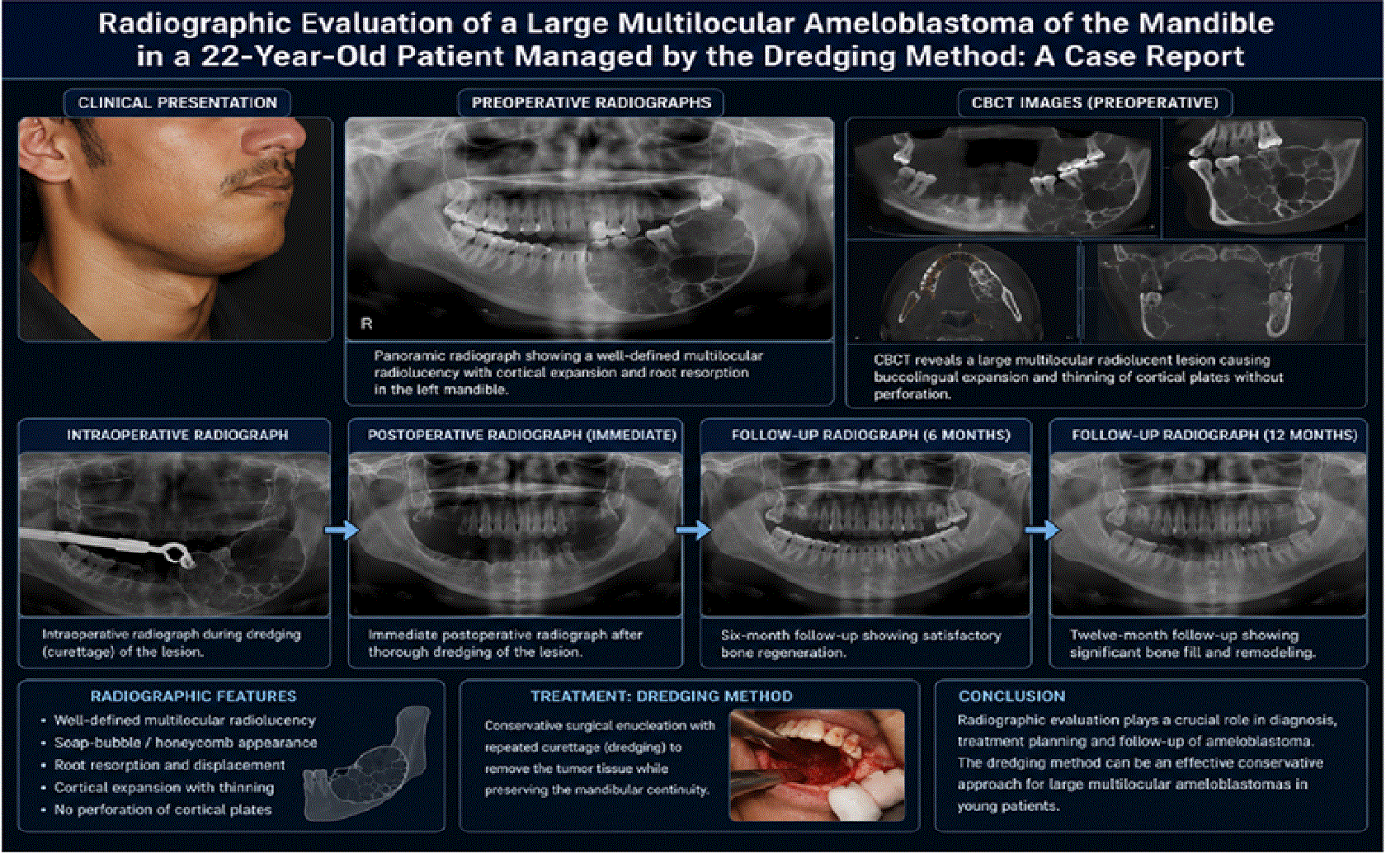
Radiographic Evaluation of a Large Multilocular Ameloblastoma of the Mandible in a 22-Year-Old Patient Managed by the Dredging Method: A Case Report
DOI:
https://doi.org/10.63912/kjaise.v1i0.0004Keywords:
Ameloblastoma, Bone regeneration, Conservative surgery, Dredging method, Mandible.Abstract
Ameloblastoma is a rare benign odontogenic tumor with a high risk of local recurrence if inadequately treated. Radical resection reduces recurrence rates but can result in significant functional and aesthetic deficits. The dredging method is a conservative surgical approach that aims to eradicate tumor tissue while promoting bone regeneration. A 22-year-old male presented with a two-year history of recurrent, painless swelling on the left side of the face. Orthopantomogram and CBCT revealed a large multilocular radiolucent lesion involving the left mandibular ramus, angle, and body, associated with an unerupted third molar. Histopathology confirmed unicystic ameloblastoma, mural type. The patient underwent enucleation, decompression, and two dredging procedures at three-month intervals. Follow-up at five months demonstrated significant bone remodeling, absence of facial asymmetry, and no evidence of recurrence. The dredging method offers an effective, conservative option for managing large ameloblastomas in young patients, preserving jaw continuity and function while encouraging bone regeneration. Long-term follow-up is essential to monitor for recurrence.
References
[1] G. Omami, "Honeycomb jaw lesion: Ameloblastoma," Ear, Nose & Throat Journal, vol. 100, no. 7, pp. 483–484, 2019. doi: 10.1177/0145561319880977.
[2] J. A. A. De Arruda et al., "Adenoid ameloblastoma in the posterior maxilla: A case report and review of the literature," Oral & Maxillofacial Surgery, vol. 24, no. 2, pp. 243–249, 2020. doi: 10.1007/s10006-020-00830-1.
[3] A. M. Bachmann and R. L. Linfesty, "Ameloblastoma, solid/multicystic type," Head & Neck Pathology, vol. 3, pp. 307–309, 2009. doi: 10.1007/s12105-009-0144-z.
[4] R. Sasaki, Y. Watanabe, T. Ando, and T. Akizuki, "Two stage enucleation and deflation of a large unicystic ameloblastoma with mural invasion in mandible," Craniomaxillofacial Trauma & Reconstruction, vol. 7, no. 2, pp. 139–142, 2014. doi: 10.1055/s-0033-1364197.
[5] H. P. Philipsen and P. A. Reichart, "Unicystic ameloblastoma: A review of 193 cases from the literature," Oral Oncology, vol. 34, no. 5, pp. 317–325, 1998. doi: 10.1016/s1368-8375(98)00012-8.
[6] M. Kawamura, N. Inoue, and I. Kobayashi, "‘Dredging method’—A new approach for the treatment of ameloblastoma," Asian Journal of Oral and Maxillofacial Surgery, vol. 3, pp. 81–88, 1991. doi: 10.1016/j.ajoms.2019.09.006.
[7] S. M. Sadat and K. Ahmed, "‘Dredging method’—A conservative surgical approach for the treatment of ameloblastoma of jaw," Journal of Bangladesh College of Physicians and Surgeons, vol. 29, no. 2, pp. 72–77, 2011. doi: 10.3329/jbcps.v29i2.7951.
.